
Chapter 4: The Weaver’s Way: A Meta-Ideology in Practice
You already know the mechanics. Chapter 2 showed how protective containers create stable patterns. Chapter 3 showed how those patterns build world-models that we carry through life.
Now the question becomes practical: what do you actually do with this?
The Weaver’s Way turns that understanding into deliberate practice.
It is a meta-ideology: a practical lens for seeing shared meaning-structures clearly, understanding why they arise, recognizing what they do well, and diagnosing where they fail. The Thread is the name of this lens. Weavers are the people who learn to use it.
Every ideology — religious, political, or secular — is ultimately a shared process of compartmentalization: stories, norms, rituals, and institutions that attempt to stabilize meaning across time. They differ in content but solve the same human problem. The Weaver’s Way does not replace your existing beliefs. It gives you a sharper diagnostic instrument to strengthen what works and recognize what does not.
In a time when many feel caught between inherited worldviews that no longer fully fit and the pressure to invent everything from scratch, this lens offers a middle path: honest understanding without rejection, and deliberate shaping without starting from zero.
Why “Meta-Ideology”
An ideology is a shared system of ideas, stories, values, and practices that helps people make sense of the world and live together. A religion is a particular kind of ideology, often weaving personal, social, and cosmic levels together through sacred stories and rituals.
The Weaver’s Way is neither. It is a higher-order lens that examines how any ideology or religion actually works. Think of it this way: physical exercise is good for the body. I can explain the underlying principles and give you tools to design better training programs, but I am not here to sell you one specific sport. You can continue with yoga, weightlifting, running, or team sports — whatever already serves you well.
The Weaver’s Way is a diagnostic and design tool, not a competing belief system. Its job is to help you see why your existing containers work, where they are failing, and how to repair or redesign them when needed. The goal is not to escape ideology but to become more skillful in how you inhabit and shape the ones that sustain you.
The Compartments You’re Already Living Inside
Even when people consciously step away from religion, they rarely leave the underlying structures it created.
The explicit beliefs may fall away. But the deeper regularities that religion helped build and protect often remain: the expectation of justice when someone is wronged, the need for shared rituals at births and funerals, the craving for belonging, moral clarity, and a sense of continuity across generations. Many former believers still participate in religious ceremonies — sometimes even as the officiant. They have removed the explicit theology, but the container keeps running.
Here is a simple way to see it. Imagine you have always bought a ticket to watch a movie. One day you realize the ticket itself is just a piece of paper — it has no intrinsic value. What you actually want is the movie. So you stop buying the ticket and keep watching the movies anyway.
At first nothing seems to change. But if enough people do this, the theater eventually runs out of funding. The movie disappears with it.
This is why simply “leaving religion” on the surface often changes less than we think. The old compartments are still doing most of the work of stabilizing life. And because those containers already fill most of our limited bandwidth, the first move of a Weaver is almost never to add something new.
What This Looks Like in Real Life
A person who leaves a high-demand career may still unconsciously follow the same 7 a.m. alarm, email-checking rhythm, and performance mindset — because those patterns fill the available bandwidth and provide the only sense of structure they have. Before redesigning the whole system, the Weaver’s move is to audit: what is this old container still stabilizing? What would actually vanish if it stopped?
Respect Finite Capacity: Start with Your Foundations
Before trying to add new regularities or redesign large parts of life, begin where the hierarchy begins: your own underlying foundations.
A strong body supports steady circulation and brain function. A well-rested brain improves judgment and emotional regulation. These lower-level stabilizations create the surplus energy and clarity that make higher meaning possible.
At the same time, remember that your capacity is already full. Every person has a limited budget of time, attention, emotional energy, and social bandwidth. Most of that budget is already being used by the patterns you currently depend on. You cannot simply add a new ritual or practice on top without something else giving way.
The practical implication is gentle but important: becoming a Weaver often begins not by adding, but by strengthening what already sustains you and consciously making room. Protect your foundations. Respect your finite capacity. Do the next right thing in the right order.
This honors the hierarchy of meaning we explored in Chapter 2 and prevents the overstretch that so often undermines our best efforts.
The Thread as Diagnostic Lens
With clearer foundations and a realistic sense of your finite capacity, you now have the space to use The Thread as a sharp but gentle diagnostic instrument.
It rests on five straightforward questions you can bring to any habit, routine, relationship, ritual, or institution in your life:
1. What patterns does it actually keep alive? Not what it is supposed to do — what does it actually do? What rhythms, behaviors, and expectations does it produce day after day?
2. What safe space or boundary does it create? Is there a genuine container here — time, place, agreed norms, role clarity — or has the boundary been leaking quietly for months?
3. What stories or ways of living does it hold onto — and which ones does it quietly weaken or push aside? Every container carries implicit values. Which ones are being preserved? Which are being crowded out?
4. What kind of life does it actually help grow — and what kind of harm or drain does it also create? The honest version of this question often surfaces things we knew but had not named. A habit that produces one benefit while quietly draining three others may not survive clear-eyed accounting.
5. How well does this still match the real world you actually live in? How much does it actually strengthen your basics — your body, energy, clarity, relationships, purpose, or sense of belonging?
What This Looks Like in Real Life
A standing Friday afternoon “all-hands” meeting that has been running for three years probably started because it genuinely served alignment. Asking question four honestly: it may now mostly serve the comfort of the leader who schedules it. People attend because declining feels risky, not because the meeting produces usable clarity. That is a container that has passed its threshold without anyone noticing. The Weaver’s move is not to cancel it immediately but to redesign it — or consciously retire it and replace it with something that actually crosses the threshold.
Through The Thread, morality itself becomes practical: moral action strengthens valuable patterns; harmful action weakens or destroys them without good reason.
Putting The Thread to Work: From Body to Society
The real power of The Thread emerges when you apply it across the layers of actual life. Because the hierarchy builds upward, start close to home and move outward.
The Body and Personal Foundations
These lower-level regularities — sleep, movement, nutrition, how you manage attention — are the base on which everything else depends.
When you turn The Thread toward your daily rhythms, patterns that once felt invisible start to stand out. An evening habit you thought was harmless might be quietly weakening your sleep container, draining the energy you need for clearer thinking the next day. With that insight, the shaping becomes simple: protect the boundary that matters most. Move the phone out of the bedroom. Choose a quieter wind-down ritual. Small changes here create surplus that flows upward and makes every other level easier.
What This Looks Like in Real Life
A person who notices that their mood is significantly worse on days after poor sleep has found a threshold condition. Sleep is not a luxury addition to their system; it is a load-bearing foundation. Protecting sleep quality — even at the cost of less screen time, fewer late-night social obligations, or an unpopular earlier exit from events — is a structural priority, not a personal preference. The Weaver sees this clearly: protect the base, and the upper floors stabilize.
Family and Close Relationships
Here The Thread helps you look at the rituals and rhythms that hold your closest relationships together.
A weekly family dinner may still create a surface sense of togetherness — but when examined closely, phones on the table and superficial conversation might be slowly undermining the deeper connection the ritual was meant to protect. The realization often points the way forward: strengthen the boundary — perhaps a no-device agreement or one round of honest check-ins. Small, consistent adjustments restore the real stability that close relationships need.
What This Looks Like in Real Life
A couple who has not had a genuine uninterrupted conversation in weeks is not experiencing a relationship problem in the usual sense. They are experiencing a container problem. The boundary that once protected real attention between them has eroded — replaced by parallel phone use, logistics management, and child-related triage. The repair is not a grand romantic gesture. It is a 20-minute protected conversation three times a week with phones in another room. Boring structural redesign. Surprisingly powerful.
Work and Teams
Organizations and professional groups are larger compartments, but they run on the same principles.
A recurring team meeting that once created genuine alignment might now feel mostly draining. Looking through The Thread, the diagnosis often becomes clear: the boundary has weakened, real conversation has moved into side channels, and the group is preserving the story of collaboration while actually losing trust and clarity. The redesign is rarely dramatic: shorten the meeting, clarify the agenda, introduce simple repair practices after conflict. These quiet adjustments restore the compartment’s ability to do what it was meant to do.
What This Looks Like in Real Life
A manager who schedules a new team “culture initiative” while the team’s basic coordination meeting is still broken is making a classic hierarchy mistake: building higher while the foundations are unstable. The Weaver’s sequence is different: fix the broken threshold condition first (the coordination meeting), watch energy free up, then consider what genuinely needs to be added at the next level.
Society and Larger Institutions
At this scale, the questions become even more important because the stakes are higher and the compartments more complex.
A traditional holiday or workplace policy may still stabilize shared identity and continuity — yet it may also be preserving stories that no longer serve the realities people actually live. The Thread does not demand that you tear anything down. It simply invites you to ask, with honesty and compassion, what is still genuinely life-giving and what may need gentle redesign or compassionate release.
Weavers participate at this level not by forcing sweeping change, but by protecting what still works and slowly weaving better alternatives — one clearer boundary, one more honest conversation, one reinforced ritual at a time.
The Weaver’s Toolkit: Four Recurring Checks
Over time you will return to a few repeatable practices. Together they form the Weaver’s core toolkit.
Figure 8: The Weaver’s Way Practice
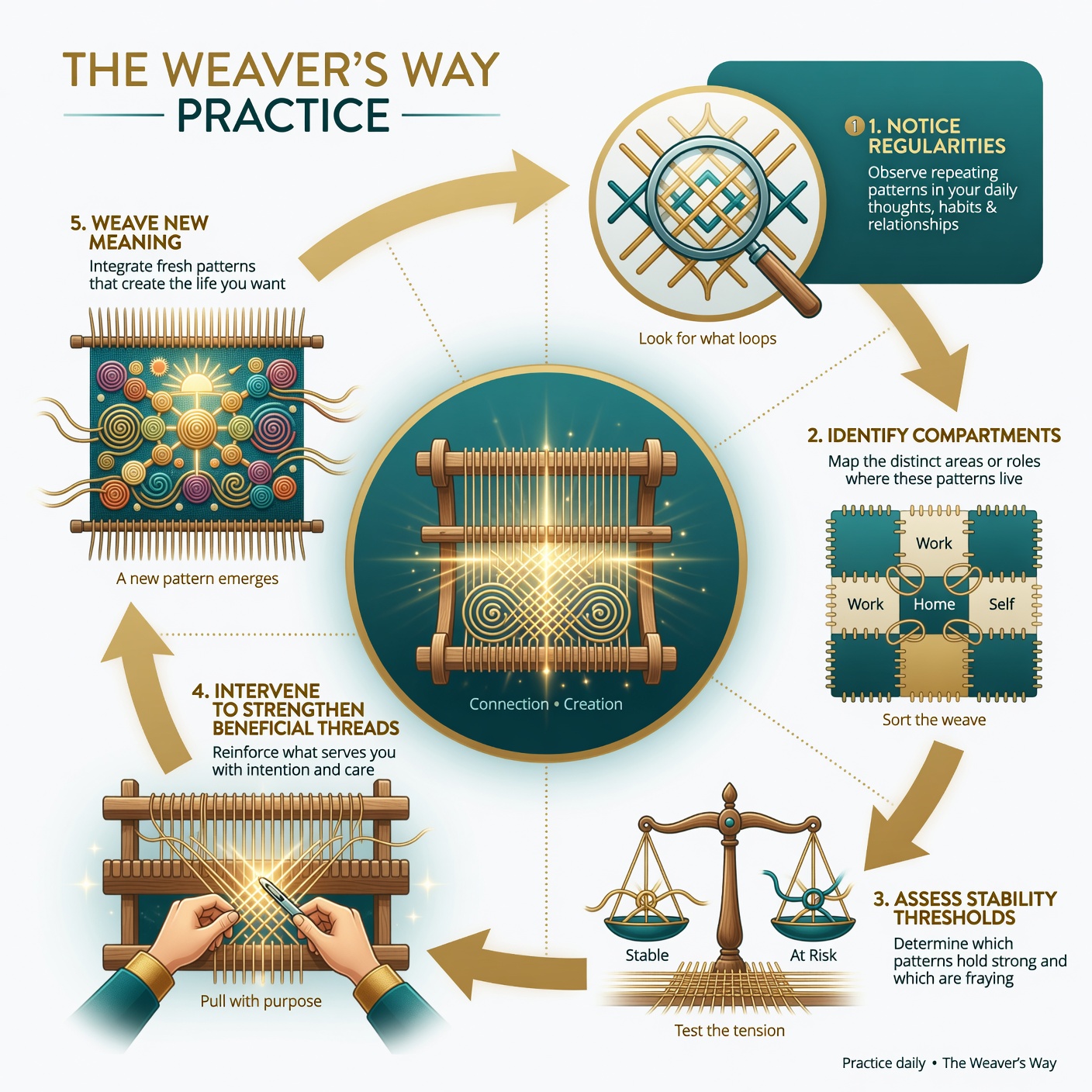
Figure 8: Practical cycle for noticing regularities, diagnosing container quality, and strengthening life-giving threads.
Check 1: What pattern is draining stability or finite capacity? Run this monthly on your most important containers — body, relationships, work, and personal practice. Find the biggest leak and address it first.
Check 2: Which boundaries need removal or reinforcement? Not all containers that once worked still work. Some need strengthening. Some need conscious retirement. Regular boundary audits prevent slow-motion container collapse.
Check 3: Which old compartments need redesign during transitions? Every major life transition (new job, new relationship, geographic move, loss) requires deliberate container redesign.
Check 4: Which inherited stories no longer serve flourishing? This is the most sensitive check and requires the most patience. Use gentle, honest questions rather than wholesale rejection. Respect what the old story was stabilizing before proposing a replacement.
Guardrails: Keeping the Weaver’s Way Alive and Flexible
Even the most useful lens can harden into dogma if left unchecked.
That is why every major container — including the ones you build yourself — should be periodically examined with fresh eyes by someone outside your inner circle. No system is exempt from honest review. Not even The Thread itself. This single practice keeps the Weaver’s Way flexible and alive.
Other guardrails:
- Humility: your view is always partial. The Thread is a map, not the territory.
- Compassion: especially toward inherited structures that once served people well — and still might.
- Patience: real change respects finite capacity and cannot be rushed without generating overstretch.
- Honest testing: the question is never “does this feel meaningful?” but “what is this actually stabilizing, protecting, and producing?”
Meaning is not something we merely think about. It is something we build. And sometimes something we must deliberately redesign or release when it has become harmful or misaligned.
The real question is no longer only “What do you believe?”
It is: “What do your beliefs and regularities actually stabilize, protect, carry forward, and produce — and where do they fail that test?”
Key Takeaways
- The Weaver’s Way is a practical lens, not a competing belief system. It strengthens existing containers rather than replacing them wholesale.
- Surface worldview changes often leave deeper compartments intact. Audit what the container is actually stabilizing before removing it.
- Start with foundations and finite capacity before higher-level redesign. Fix the lower floors before building upward.
- Apply The Thread across body, family, work, and society in that order — building on stable foundations at each step.
- Wise shaping protects what sustains life, repairs what is failing, and releases what no longer serves.
- Conscious weaving is usually gradual: deliberate, patient, and compassionate toward what already exists.
- Keep the lens flexible. Revisit even your most trusted containers regularly with outside perspective.