Listen to this article
The Week: The Rhythm We Wove Because Nature Already Gave Us One
A Weaver’s Look at the Most Human Time Unit
This piece uses a few simple ideas from the book Threads of Meaning. I’ll explain them in plain language as we go so you don’t need to have read the book.
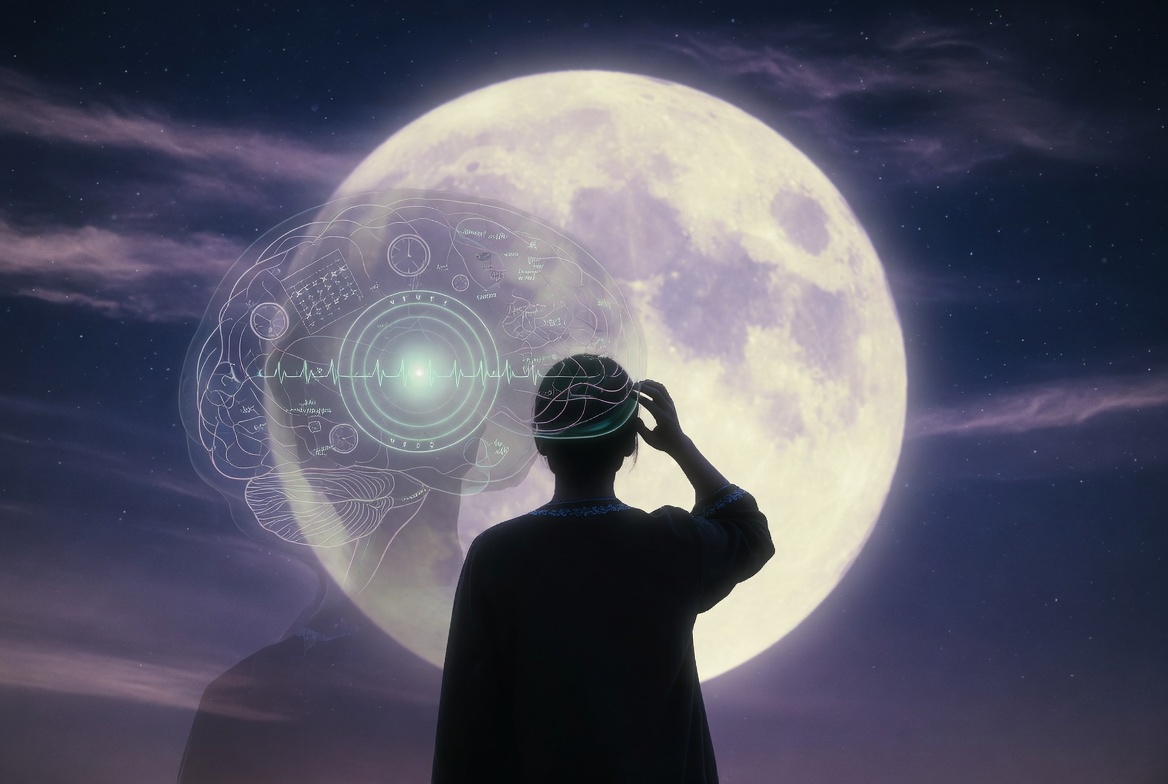
A solar year is a masterpiece of observation.
A lunar month is a work of art — the Moon literally draws it for you every night.
But the week?
There is no celestial body that resets every seven days. No star, no phase, no season demands it. On the surface, the week looks like a pure human invention — the first time unit we created entirely from scratch.
And yet… it feels inevitable.
That tension is the real story.
The Sky Gave Us the Big Rhythms
Our ancestors didn’t need telescopes to notice the obvious loops in nature.
The Moon swells and shrinks in a reliable dance — roughly twenty-nine and a half days. That became the month. You could plan planting, hunting, or rituals around it. The oldest calendar marks we have, scratched on bones thirty thousand years ago, are lunar.
The year emerged from the ground itself: the return of the rains, the flooding of the Nile, the migration of animals, the slow change in the Sun’s arc. You didn’t need to understand orbits. You just watched the world repeat.
These were gifts from the universe. We noticed them and built protective containers around them — reliable boundaries that kept those natural patterns alive and stable.
Then we did something different.
We Didn’t Invent the Week From Nothing
Somewhere in ancient Mesopotamia, people began marking time in stretches of seven days. The Babylonians noticed seven bright “wanderers” in the sky and let that number shape their shorter cycles. The Jews made it sacred. The Romans made it official. It spread across the world.
But here’s what most historians miss:
The number seven wasn’t pulled out of thin air. It was already pulsing inside us.
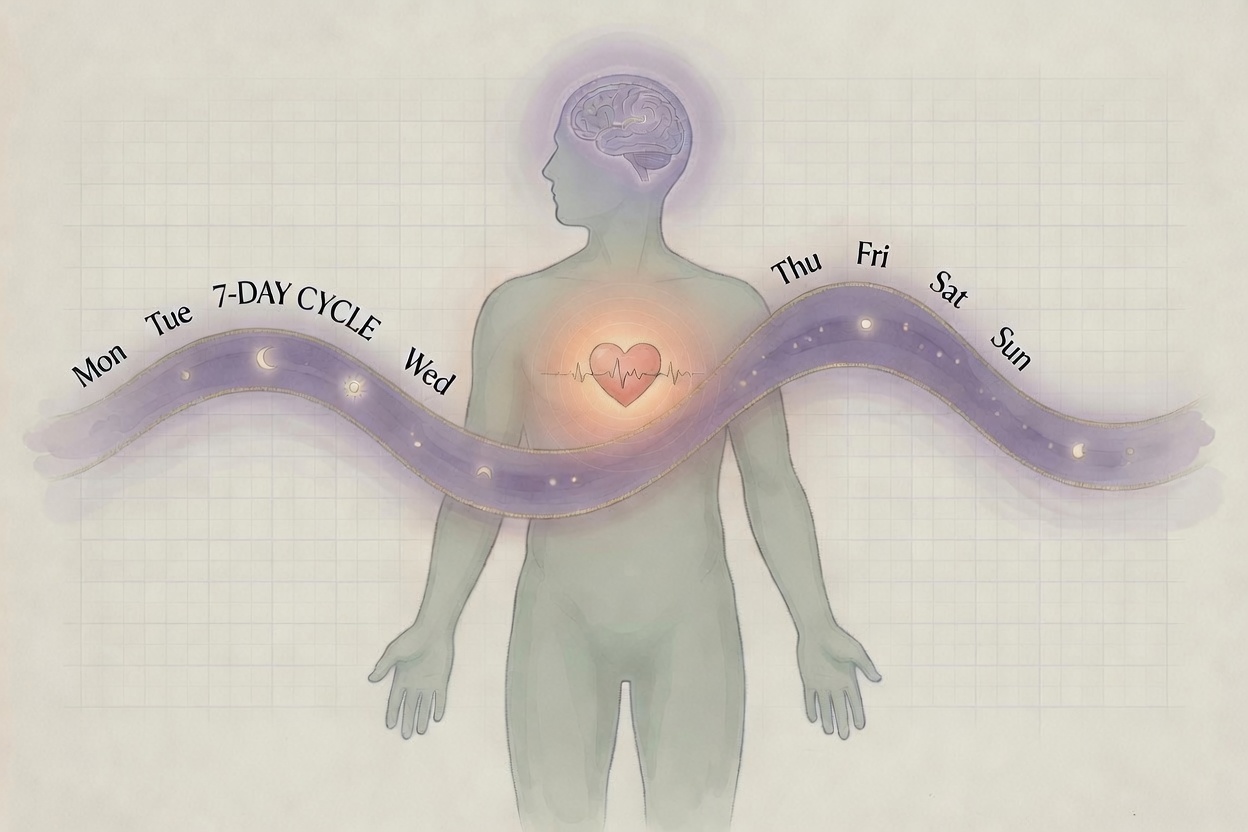
Modern chronobiology has revealed that humans carry endogenous circaseptan rhythms — biological cycles of approximately seven days. These rhythms show up in heart rate, blood pressure, immune activity, hormone levels, wound healing, and even how we respond to stress. They appear in other species too and continue even when people are isolated from all social and environmental cues.
In other words: we were already running on something close to a weekly beat before we ever named it.
The calendar week didn’t create the rhythm. It gave form to a rhythm that was already there.
Why Seven Days Felt Right
Our attention, motivation, and energy don’t flow in one long continuous stream. They rise and fall. After about five to ten days, most people feel a natural dip — a need for reset, reflection, and renewal.
Seven days sits in the sweet spot where we can sustain real effort and still see the finish line.
That’s not cultural conditioning. That’s biology.
The week is a protective container around our finite capacity — our limited daily supply of time, energy, and attention. It respects the fact that we are not machines with infinite focus. We get tired. We forget. We need rhythm to stay alive to what matters.
Other cultures tried four-day, five-day, eight-day, and ten-day cycles. Some worked for a while. But seven won the long game because it aligned so cleanly with something already written into our bodies and minds.
The sky gave us the month and year.
We gave ourselves the week — but we were only finishing what nature had already started.
What the Week Actually Means
In the language of The Thread, the week is one of the most beautiful examples of meaning-making we have.
We didn’t just copy the sky. We looked inward, noticed the quiet weekly pulse already running through our physiology and psychology, and gave it a visible shape. Then we repeated it until it became stable. Over centuries, that stable pattern accumulated meaning — and conferred new collective coordination capabilities on everyone who lived inside it: rest as sacred, markets as reliable, community as rhythmic, personal goals as trackable.
The week is not a law of physics.
It is a human technology that turned an internal biological rhythm into a shared social rhythm.
That is why it feels so natural even though nothing in the sky demands it. We didn’t invent the beat. We simply recognized it, named it, and protected it.
The Week Today — Are We Still Listening?
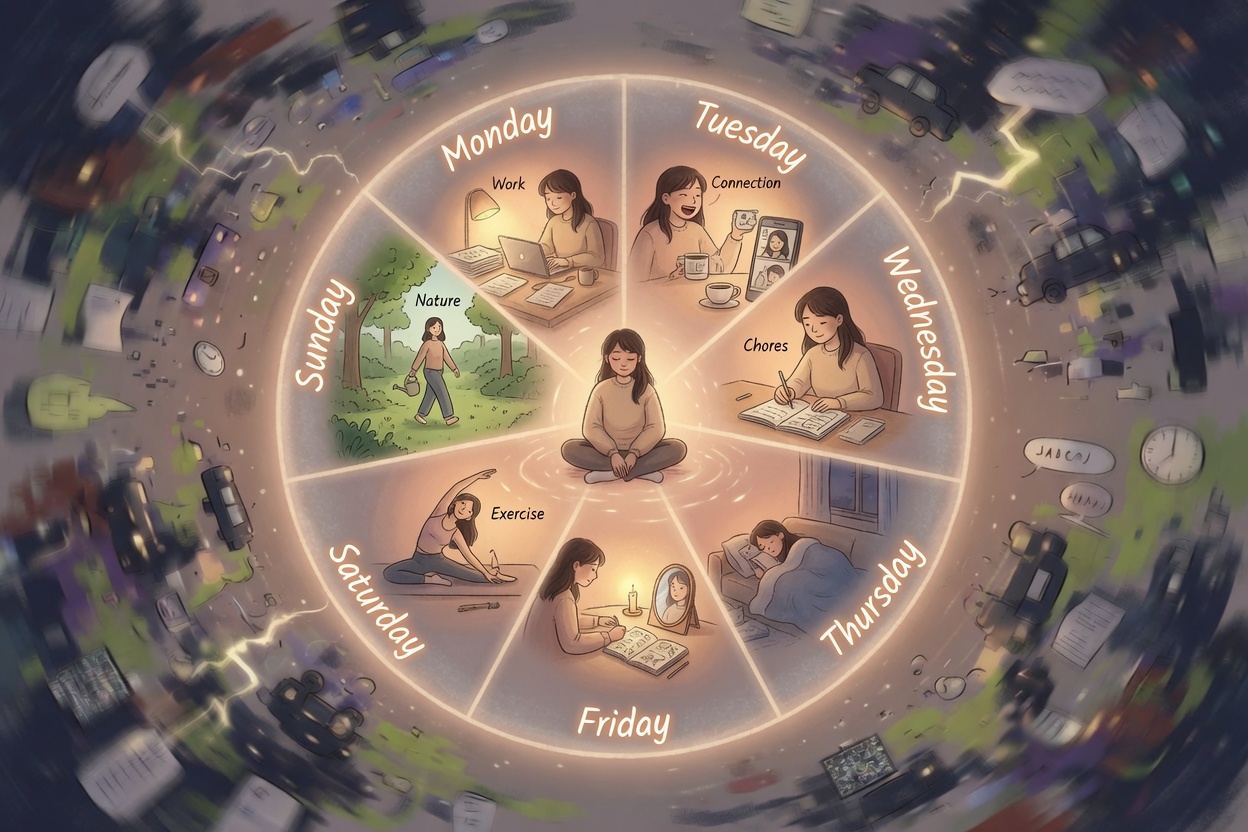
We still live inside this ancient container. Monday motivation, Friday relief, Sunday reset — these aren’t accidents. They are the week doing exactly what it was designed to do: create frequent, predictable touchpoints where we can pause, reflect, coordinate, and begin again.
The real question is no longer where the week came from.
The real question is: Are we still using it consciously?
Are we treating the week as a protective container that respects our actual energy and attention — or are we letting it become another source of pressure? Are we weaving meaningful rhythms inside it — rest that actually restores, work that actually builds, connection that actually nourishes — or are we just surviving seven days at a time?
Key Weaver Reminder
Before you let another week slip by on autopilot, ask yourself honestly:
What real rhythm inside me am I ignoring? Am I giving this ancient container the attention it deserves, or am I just letting it carry me?
The month and the year were given to us by the universe.
The week is something we gave back to ourselves — because we finally noticed what was already beating inside us.
And that, perhaps, is the deepest thread of meaning in it.
We looked at the sky and the soil and said, “These are beautiful.”
Then we looked at ourselves and said, “And this too.”
So we wove it.
And four thousand years later, it still holds.
This piece is an exploration in the spirit of The Thread — a living note on how humans turn invisible rhythms into visible meaning.